CMU PhD Candidate · Robot Learning & Embodied Intelligence
Aman Chulawala
Embodied intelligence & real-world robot learning.
I am a PhD candidate at Carnegie Mellon building robots that learn from experience and act reliably in the physical world — with learning, perception, planning and hardware treated as one system.

About
I am a PhD candidate in Mechanical Engineering at Carnegie Mellon, in the Computational Engineering and Robotics Lab (CERLAB) advised by Kenji Shimada. My research is in robot learning and embodied intelligence: how a robot should turn what it senses into what it does, and how to make learned behavior hold up on real hardware rather than only in simulation.
I came to this from 3D perception and planning. My MS thesis at CMU used reinforcement learning to choose sensor viewpoints for complete coverage of 3D parts, and alongside it I worked on pose estimation and point cloud registration for robotic inspection. A summer at Neocis integrating surgical robots taught the same lesson from the industry side: a method only counts once it runs on the machine.
If you are working on learning for real-world robots — in a lab or on a product team — I would be glad to hear from you. Get in touch.
- Degree
- PhD Candidate · CMU
- Focus
- Embodied AI
- Built
- 15 Projects
- Bias
- Sim → Real
News
All news →- Attended IROS 2026 in Pittsburgh, PA to present our paper Potential Field-Based Continuous View Planning for Robotic Shape Reconstruction (with Abdulaziz Almusa and Kenji Shimada).
- Cleared my PhD Qualifying Exams in Mechanical Engineering at Carnegie Mellon University.
- Started my PhD in Mechanical Engineering at the Computational Engineering and Robotics Lab, Carnegie Mellon University, advised by Kenji Shimada.
- Joined CERLAB full-time as a Researcher, working on robotic inspection pipelines for additive-manufacturing post-processing.
- Completed my MS in Mechanical Engineering (Research) at Carnegie Mellon, with a thesis on learning-based coverage viewpoint planning.
Robot Learning & Policies
Learning-based decision making and control — policies that map what a robot observes to what it does next, trained to hold up beyond the environment they learned in.
3D Perception & Active Sensing
Deciding where to look and making sense of what comes back: coverage viewpoint planning, 6-DoF pose estimation, and point cloud registration with a measure of when to trust it.
Sim-to-Real Hardware Systems
Taking algorithms out of simulation and onto real arms, 3D sensors and mobile platforms — the integration work that decides whether a method actually ships.
Selected Research
All research →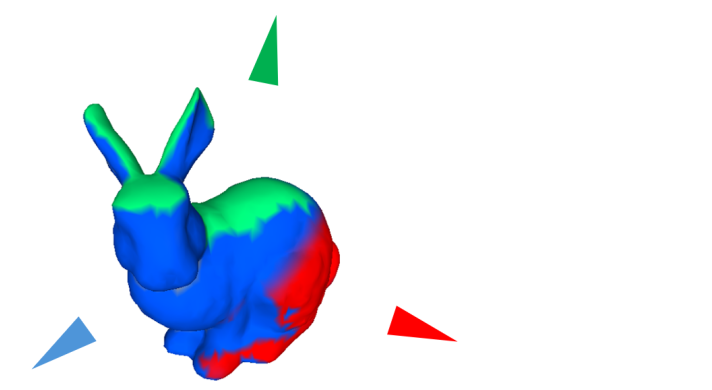
Learning Viewpoint Estimation for Coverage Path Planning
A PPO-based approach to selecting viewpoints for complete surface coverage of 3D parts, trading exhaustive search for a policy that generalizes.
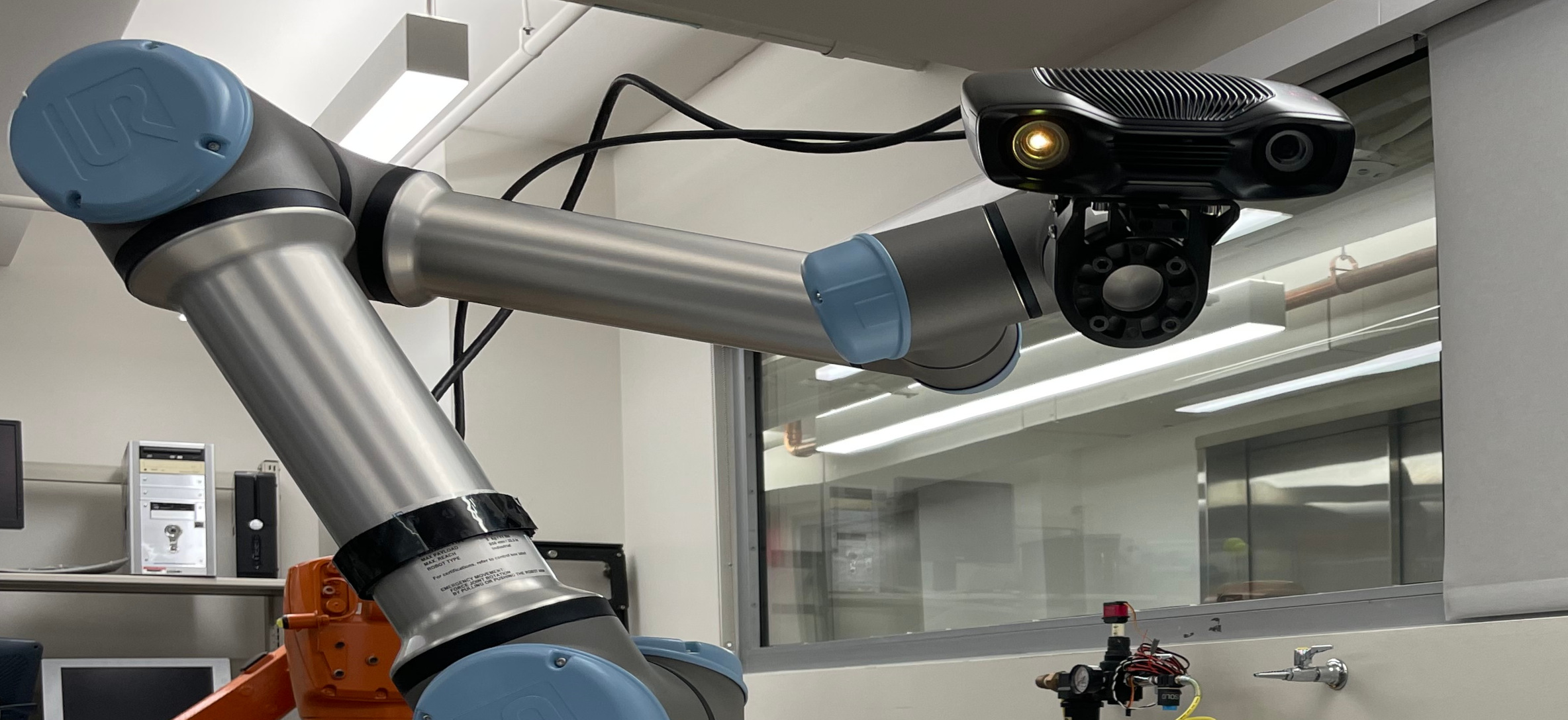
Robotic Metrology for AM post-processing
Robotic metrology for additive-manufacturing post-processing: scanning printed parts automatically and measuring them against their source geometry.
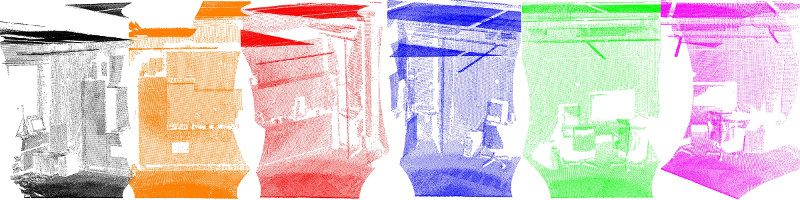
Quality Metric for Aligned Point Clouds
A quality metric for point cloud registration, so a pipeline can tell whether an alignment is good enough to act on rather than assuming it is.
Selected Projects
All projects →
Viewpoint Simulation for Coverage Planning
A ROS package for simulating and benchmarking coverage viewpoint planning algorithms against arbitrary 3D parts.

Mobile Planning Platform for Inspection
An autonomous mobile platform for factory inspection, using adaptive Monte Carlo localization and visual servoing to reach places fixed machinery cannot.

Panel Gap Identification for Automobiles
Automated metrology of automotive panel gaps built entirely from classical computer vision — no machine learning anywhere in the pipeline.
Writing
All writing →Embodied Question Answering Under Uncertainty: When to Look, Remember, or Abstain
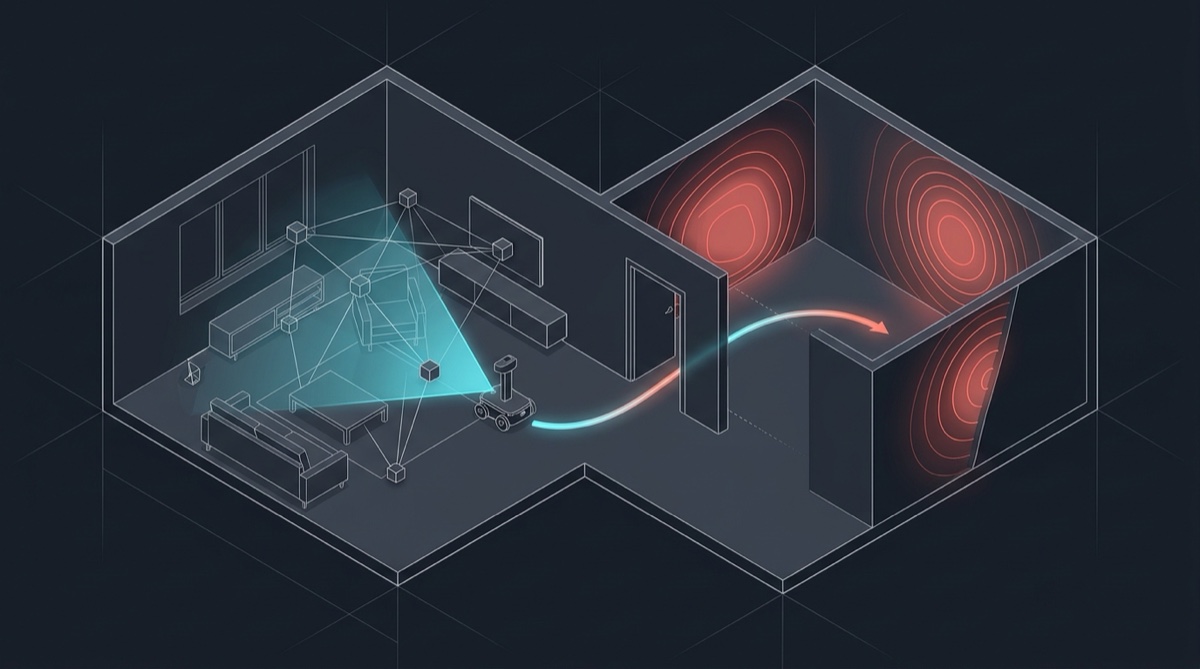
Answering questions in the physical world is not a static VLM prompt — it is an active decision problem under partial observability, memory drift, and calibrated uncertainty.
The Crucible of Self-Supervision
What looked like a tennis match between Meta and Google turned out to be a field-wide conversation — the 24-month sprint that rewrote computer vision.
Conformal Prediction in Robotics: From Distribution-Free Guarantees to Closed-Loop Safety
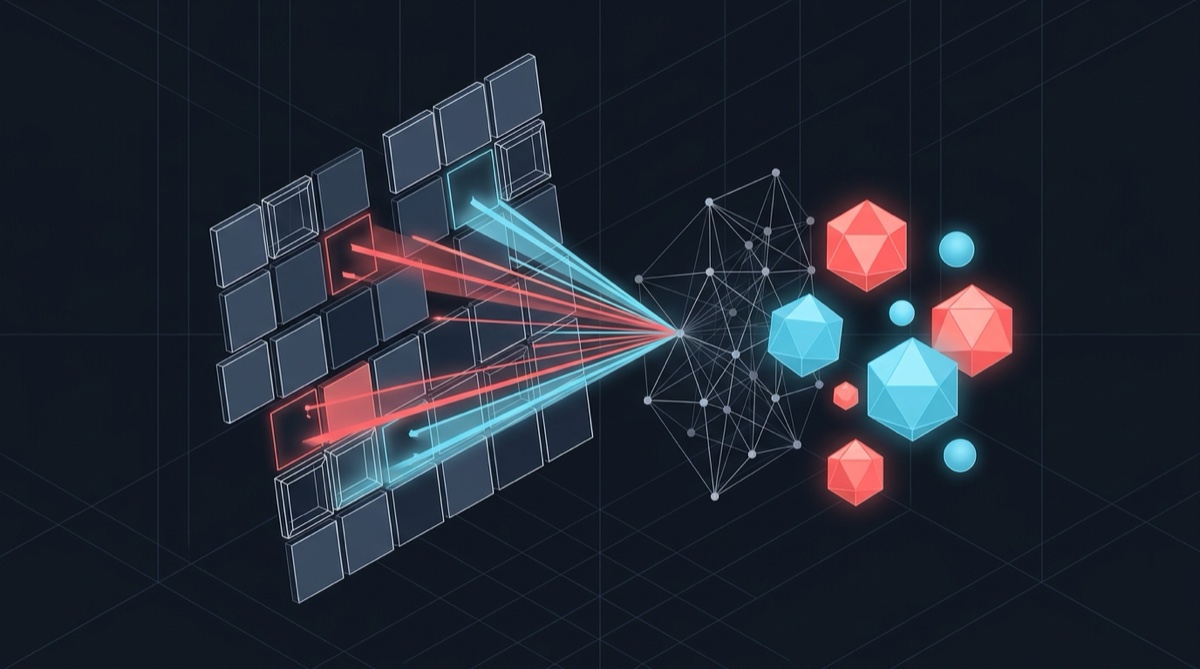
How a remarkably simple quantile trick turns black-box neural networks, VLMs, and generative robot policies into uncertainty estimators with finite-sample coverage guarantees.
Inside cuRobo: How GPU-Parallelized Motion Solvers Plan Collision-Free Trajectories in Milliseconds
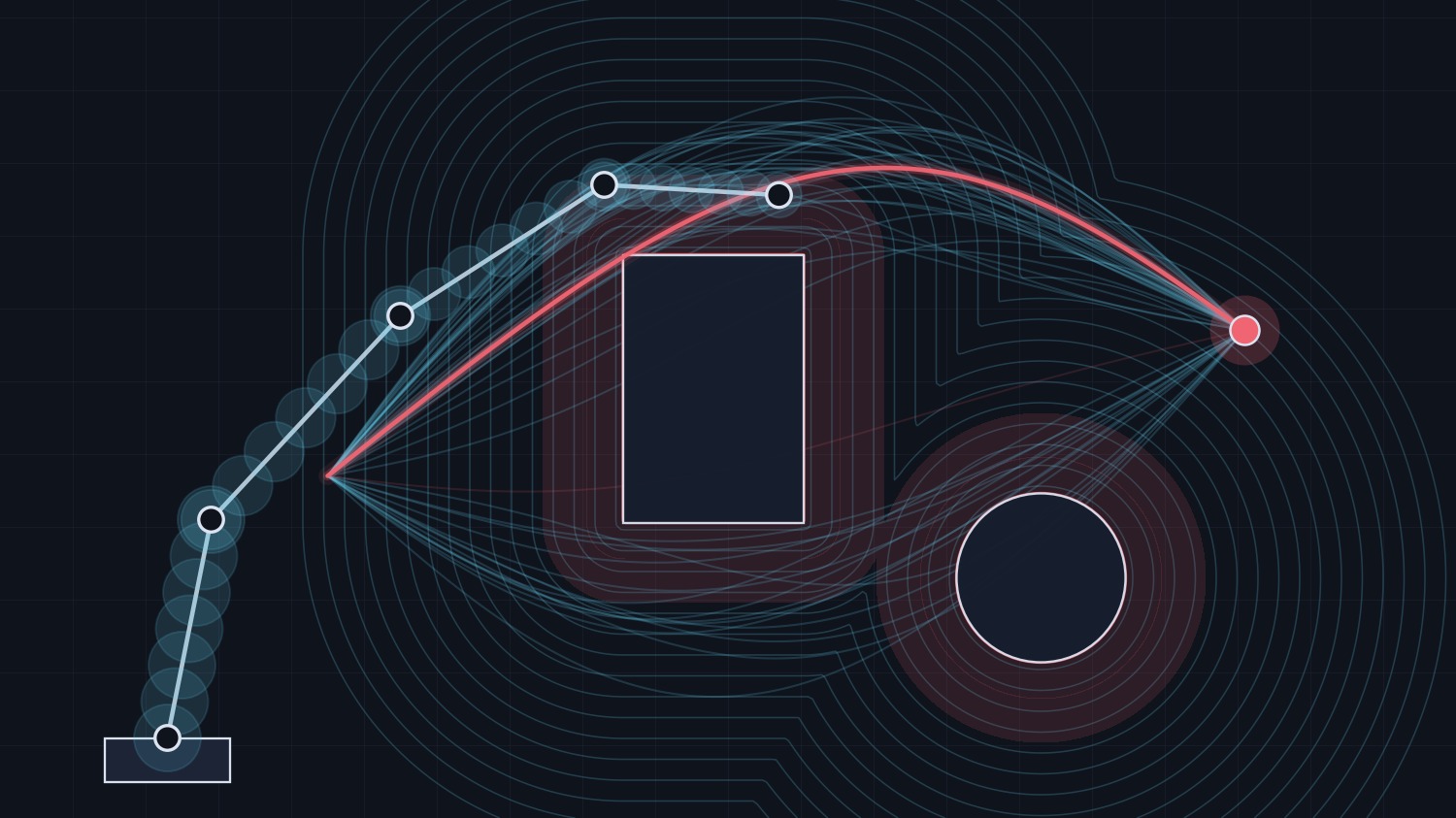
Classical CPU motion planners search configuration space sequentially and take seconds. Here is how cuRobo-style solvers reformulate kinematics, collision checking, and trajectory optimization to run massively in para...

Background
Full CV →Education
PhD, Mechanical Engineering
Carnegie Mellon University · CERLAB, advised by Kenji Shimada. PhD candidate since September 2026.
MS, Mechanical Engineering (Research)
Carnegie Mellon University · Robotics and Controls
BE, Mechanical Engineering
University of Mumbai
Experience
Researcher · Carnegie Mellon University
Robotic inspection and metrology pipelines at CERLAB.
Robotic Systems Engineer (Intern) · Neocis
Surgical robotics — systems integration and validation.
Graduate Researcher · Carnegie Mellon University
Coverage viewpoint planning and point cloud registration.
Product Design Engineer (Intern) · RoboSlog
Structural Lead · DJS Racing
Formula Student — chassis, composites, and business plan. More →