Viewpoint Simulation for Coverage Planning
Coverage viewpoint planning asks where to put a scanner so that a handful of measurements see all of a part. Evaluating an answer on real hardware is slow (fixture the part, move the scanner, register the clouds, repeat) and gets slower the more strategies you want to compare. This package runs the same loop in simulation, so a planner can be measured against an arbitrary mesh in minutes.
What it does
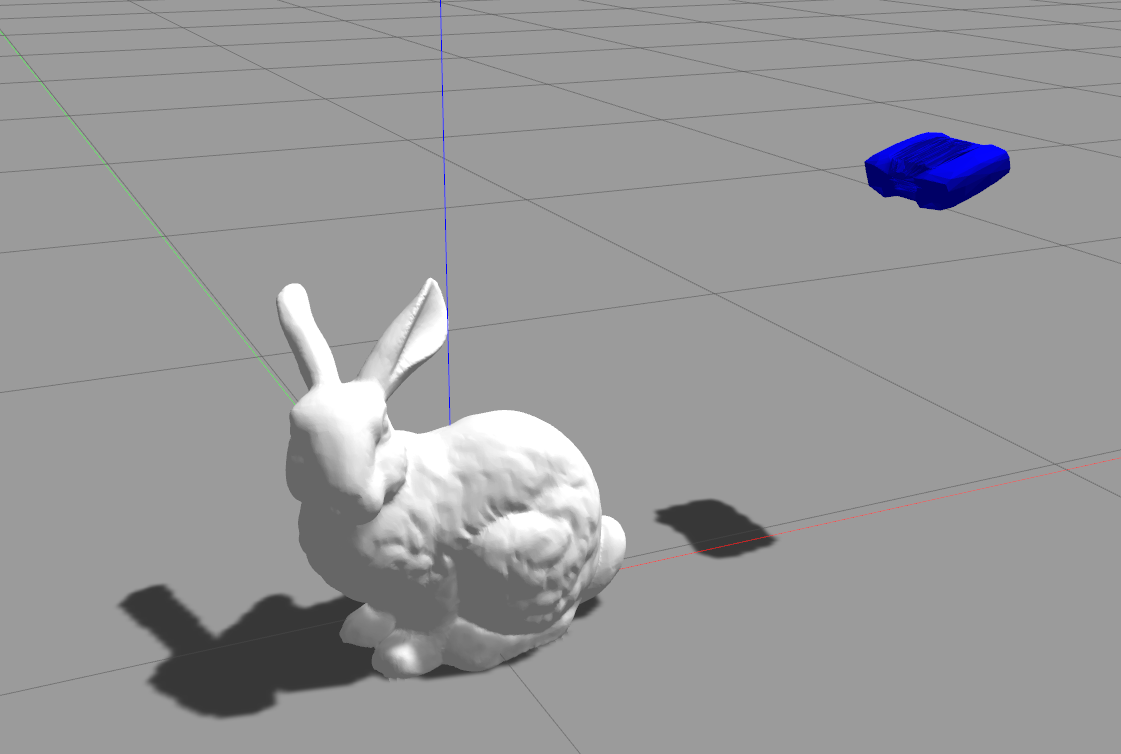
The package spawns a structured light sensor, modeled on the Zivid 2+ with a URDF and the Gazebo plugins needed for depth and color capture, at any pose in a scene, and returns what it sees from there. A planner drives it through ROS services: load a target mesh, set a pose, capture.
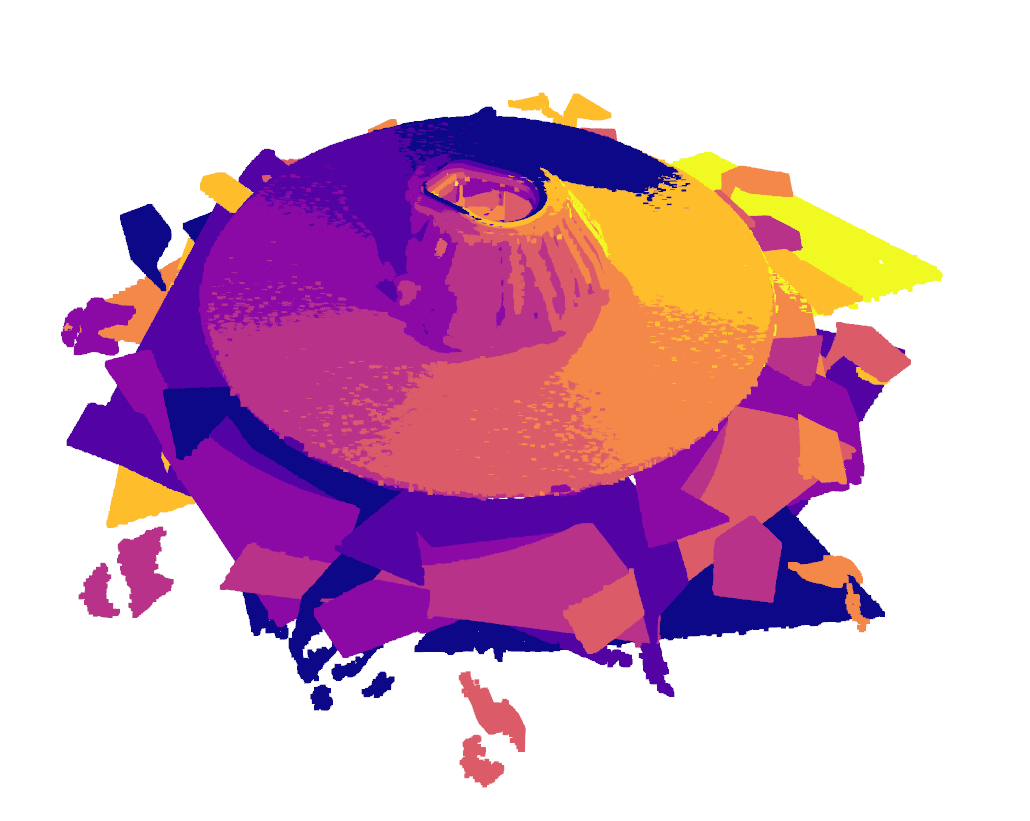
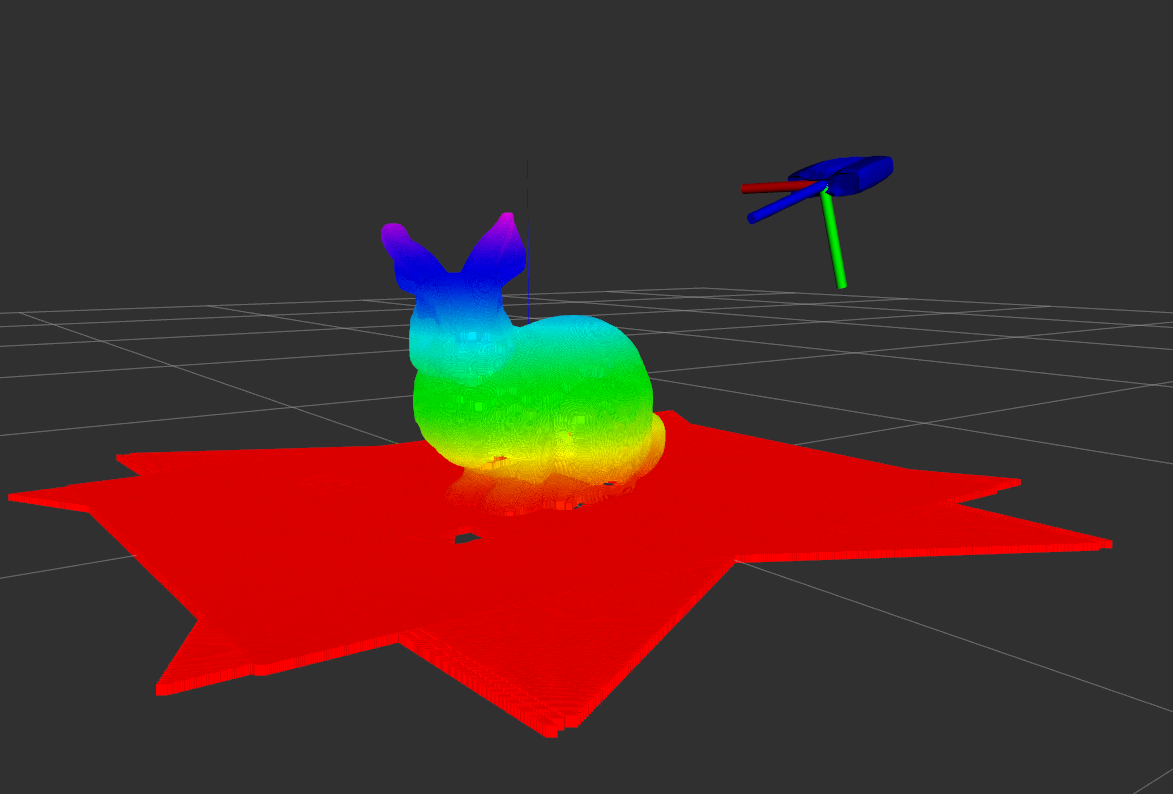
Each capture publishes two point clouds: the surface just measured, and the running union of everything measured so far. The second is the useful one, because accumulated coverage is the quantity a viewpoint planner is trying to maximize. TF frames are managed throughout, so the clouds arrive already registered rather than needing alignment afterwards.
Why it exists
Coverage planning research tends to be evaluated on whatever part the authors had to hand, which makes results hard to compare. Swapping the target here means dropping a new mesh into the models directory, so the same planner can be run against a simple convex shape and an awkward one with deep concavities, and the difference attributed to the part rather than the setup.
The package underpins my work on learning-based coverage viewpoint planning at CERLAB, and the same questions of where to look next run through our IROS 2026 paper on continuous view planning.