Robot Teleoperation for Remote Inspection
This project came out of an effort to support routine maintenance in automated factories. It is one half of a planned wheeled inspection robot: the manipulator side, which lets an operator at a remote location control a robot arm precisely, either in a guided mode with assistance or in full manual mode.
I built the teleoperation package to work across platforms. The operator interface runs on WebXR, so the same stack drives the arm from an Android device or a Meta Quest headset, sending velocity or pose commands to the robot.
Architecture
The system went through two architectures: a centralized ROS 1 pipeline built for velocity control, and a decentralized ROS 2 design that supports several command modes.
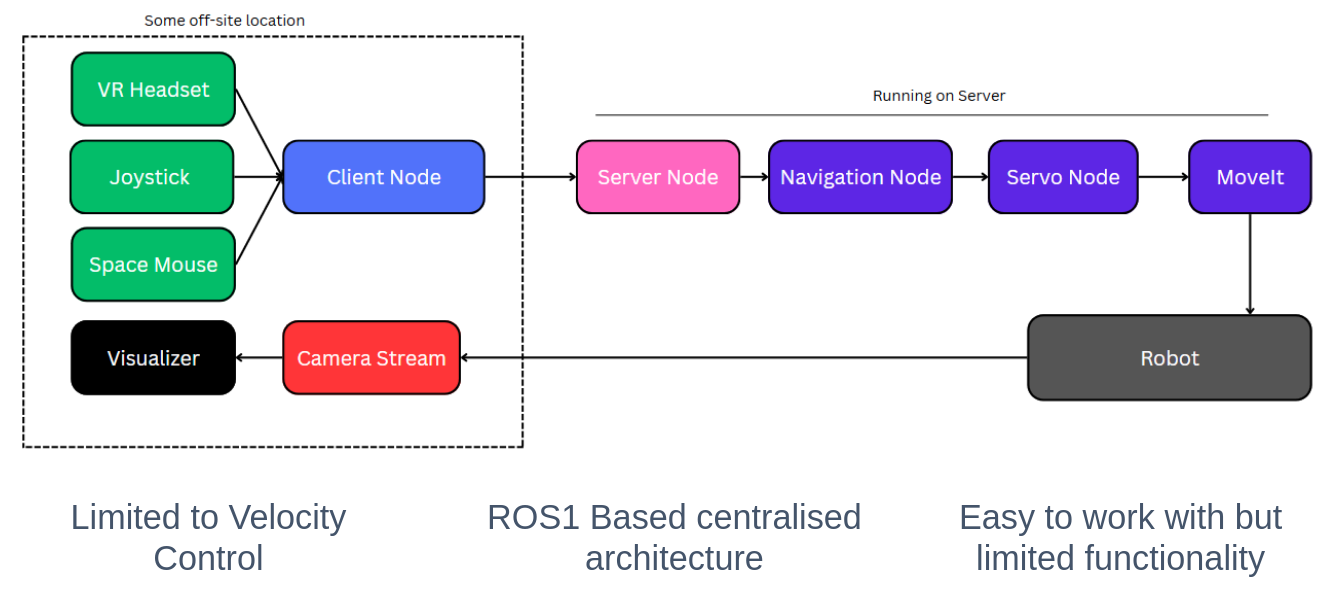
The ROS 1 version routes every input device through a single client node. On the server, commands flow through a linear pipeline to the robot. It was simple to implement and very reliable, but it only supported velocity commands, and the linear structure made it hard to extend.
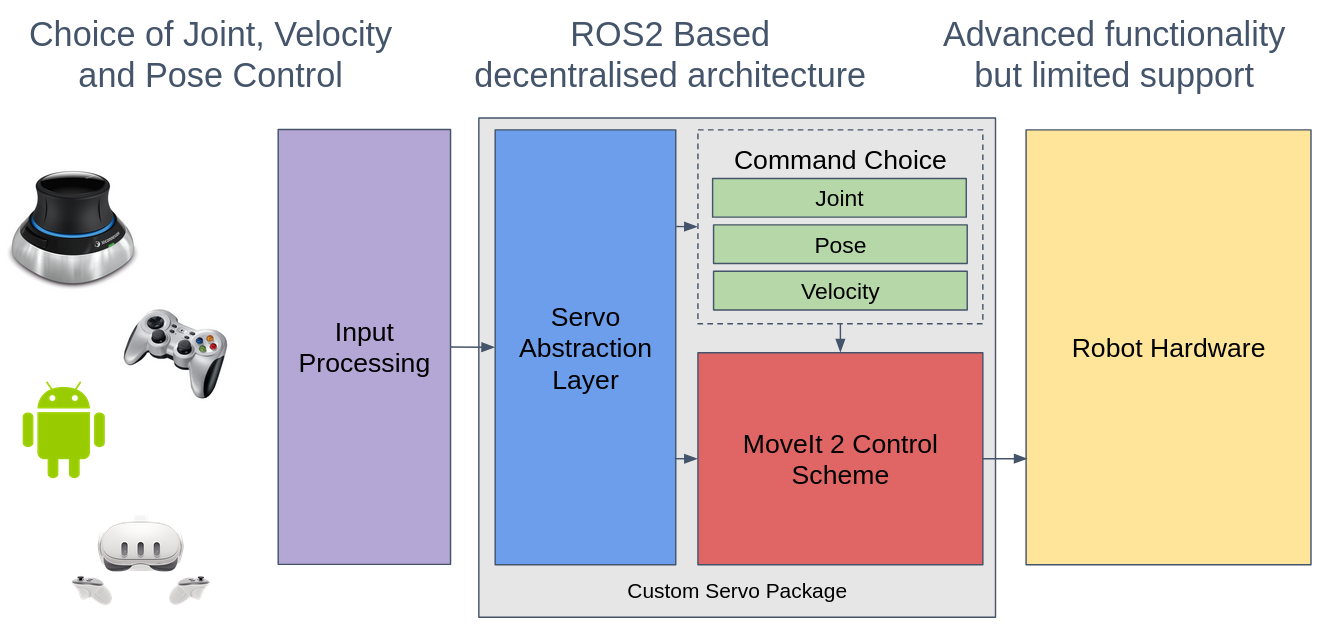
The ROS 2 version adds a servo abstraction layer, part of a custom servo package, that accepts three command modes: joint, pose and velocity. The operator picks whichever suits the task, and decentralizing the nodes makes more complex operation possible without giving up stability or responsiveness. The cost is more setup up front and less mature tooling than the ROS 1 version.
Applications
The same arm handles different inspection tasks by swapping the sensor pack on its end effector.
Structured light part inspection
Pairing a structured light sensor with a camera gives 3D surface mapping for defect detection, along with non-contact measurement of complex geometry.
PCB inspection
With a high-resolution camera on the end effector, the operator can check component placement, solder joints and surface-mount defects.
Mechanical system inspection
For industrial machinery, the setup targets gauge reading, pipe integrity checks and verifying sealant application.
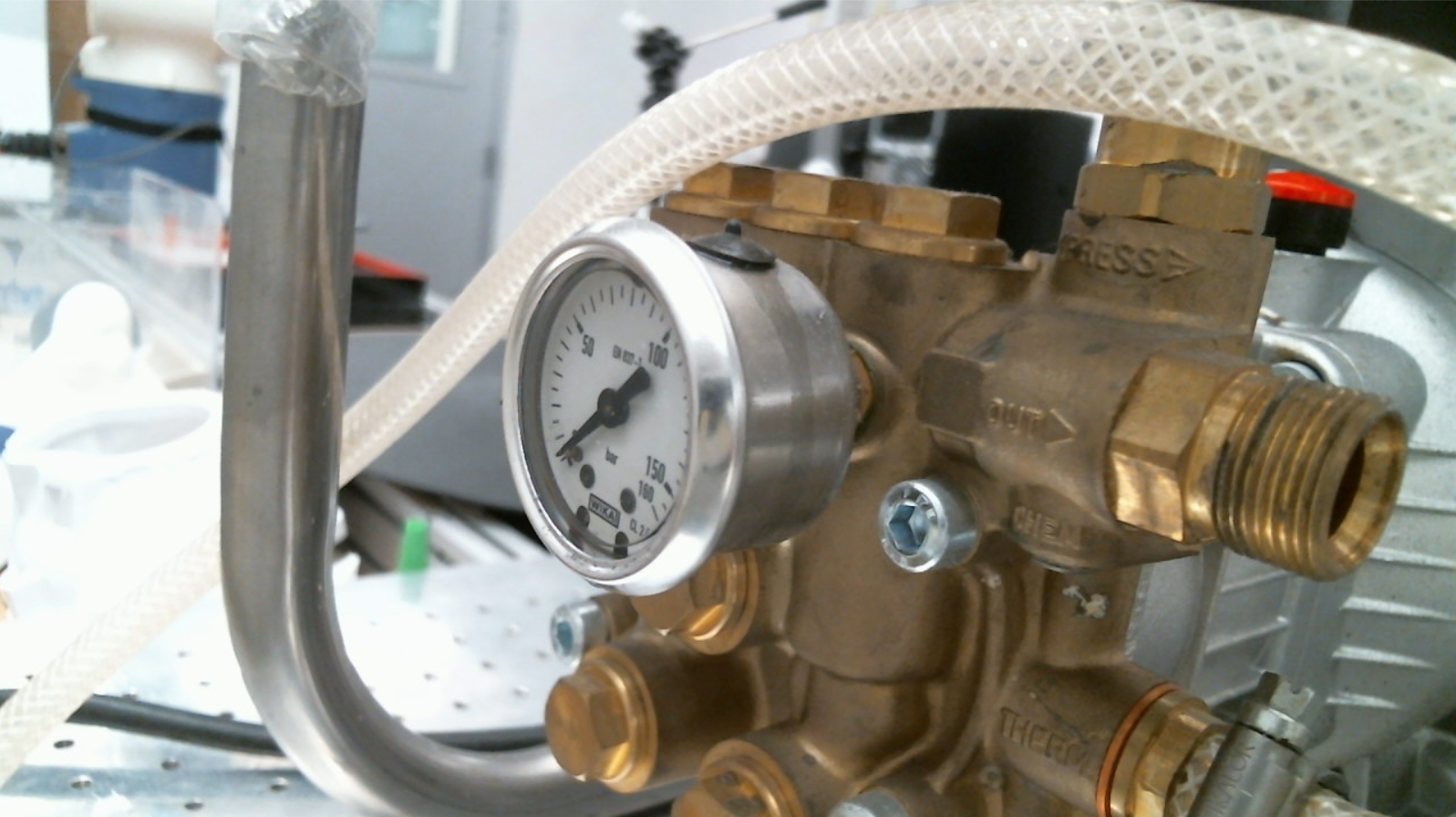
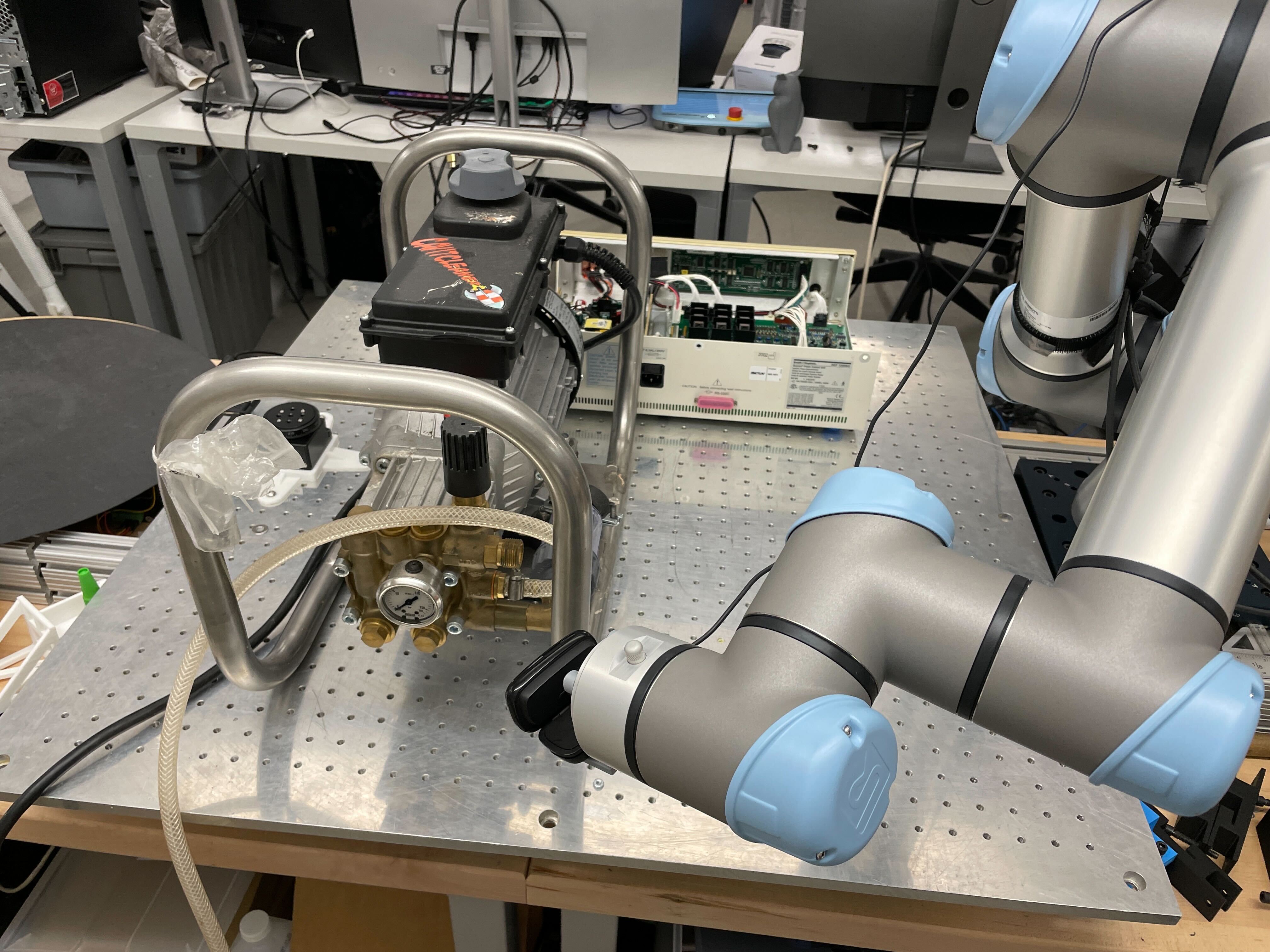
Where this goes next is shared autonomy: inferring what the operator is trying to do and enforcing safety constraints without fighting their input. I wrote about that in Intent-Based VR Teleoperation.